Booth Design & Fabrication: Info to Prepare for a Quote
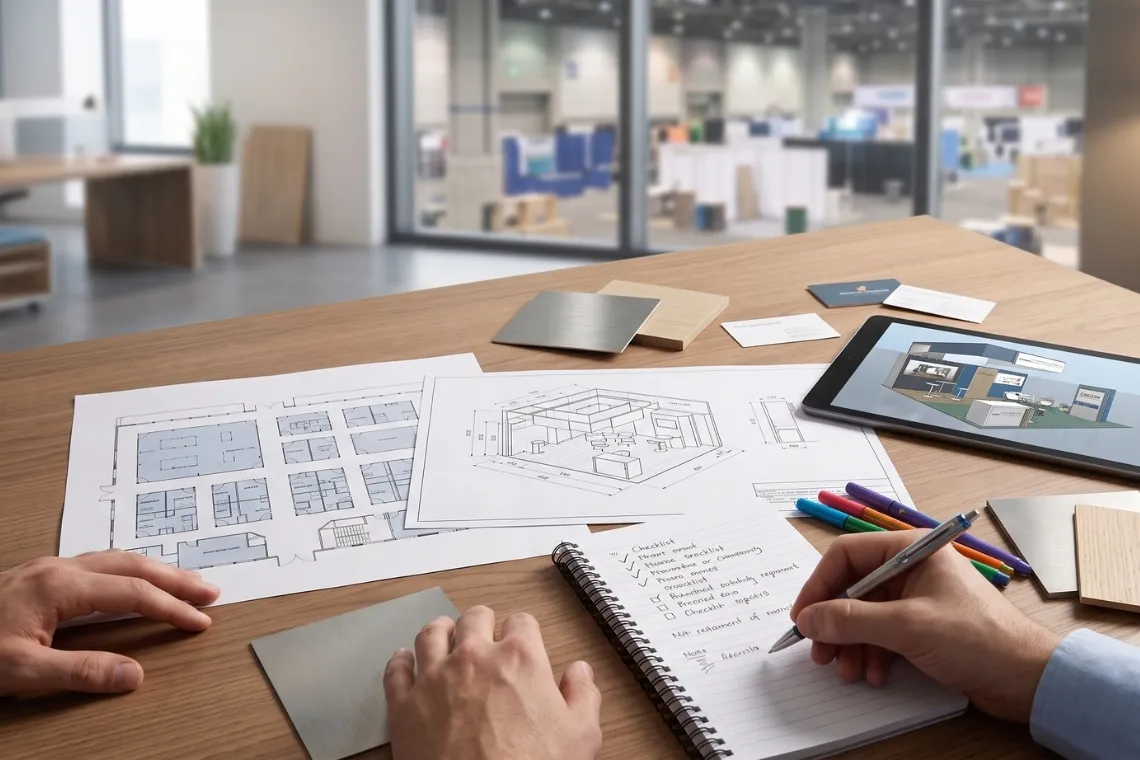
Many brands reaching out for a booth quotation for the first time often get stuck in a back-and-forth loop of questions and answers before getting a realistic budget estimate. Sometimes, even after receiving a quote, they remain unsure of what it actually covers. Ultimately, the design ends up being revised multiple times simply because the initial information was incomplete.
This is a common bottleneck, but it is easily preventable.
To help you get an accurate quote, a design that hits the brief, and save valuable time for both sides, we have compiled a checklist of the essential information booth design and fabrication teams actually need from you.
1. Basic Booth Space Details
This dataset is the most critical because it directly dictates the structure, scale, and overall cost of the project.
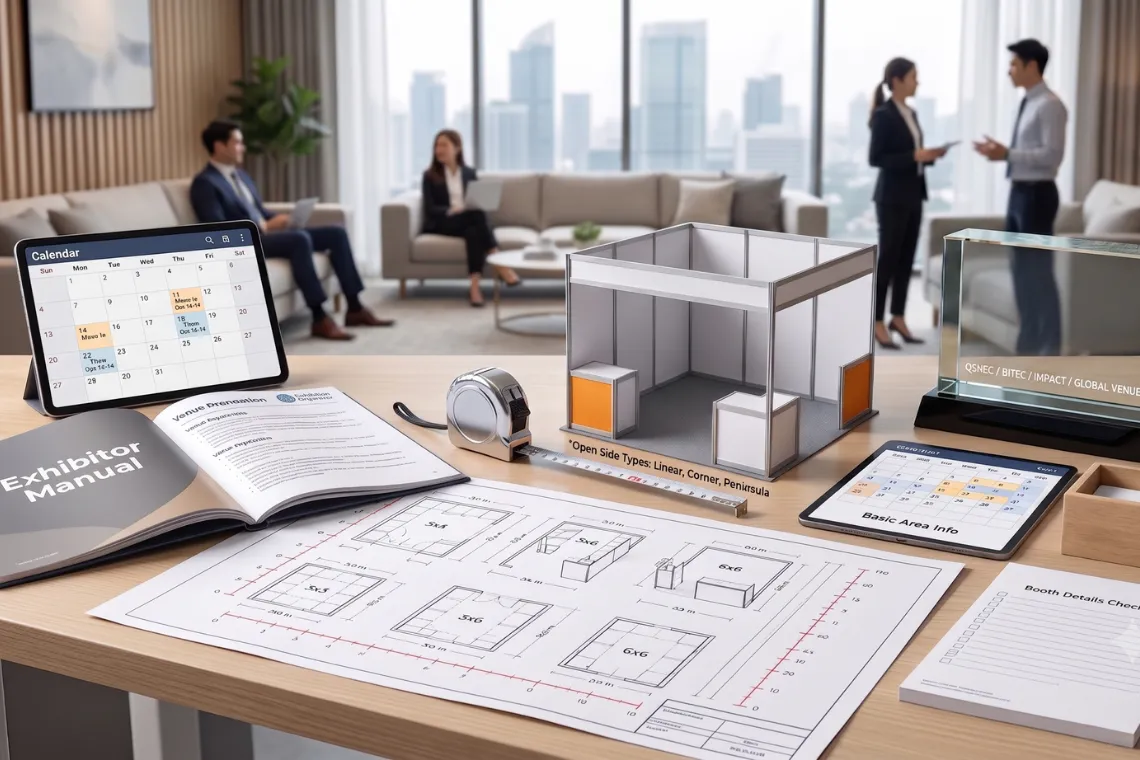
- Booth Size: The dimensions of your space are the starting point for everything. Examples include 9 sq.m., 18 sq.m., 36sq.m., or any custom size allocated by the organizer. If you haven't finalized the booking yet, a rough estimate of your desired size works too.
- Number of Open Sides: How many sides of your booth face the aisle? Whether it is a standard one-side open (Linear), two-sides open (Corner), or three-sides open (Peninsula) greatly impacts the layout design, signage orientation, and visitor flow.
- Maximum Allowed Height: Every exhibition has its own set of rules. Some organizers cap the height at 3 meters, while others allow up to 4–5 meters. Sending over the Exhibitor Manual is the best way to clarify this.
- Event and Move-In Dates: Specify the exact event dates and the permitted move-in/setup window (e.g., 1 or 2 days prior to the event). This directly affects production timelines and onsite manpower planning.
- Venue & Event Name: State the name of the show and the venue (e.g., BITEC, IMPACT, QSNCC, or international venues). Different exhibition halls have unique logistical constraints and utility fees.
2. Booth Objectives & Functionality
Knowing why you are exhibiting is what separates a booth that "just looks good" from a booth that "delivers actual business results."
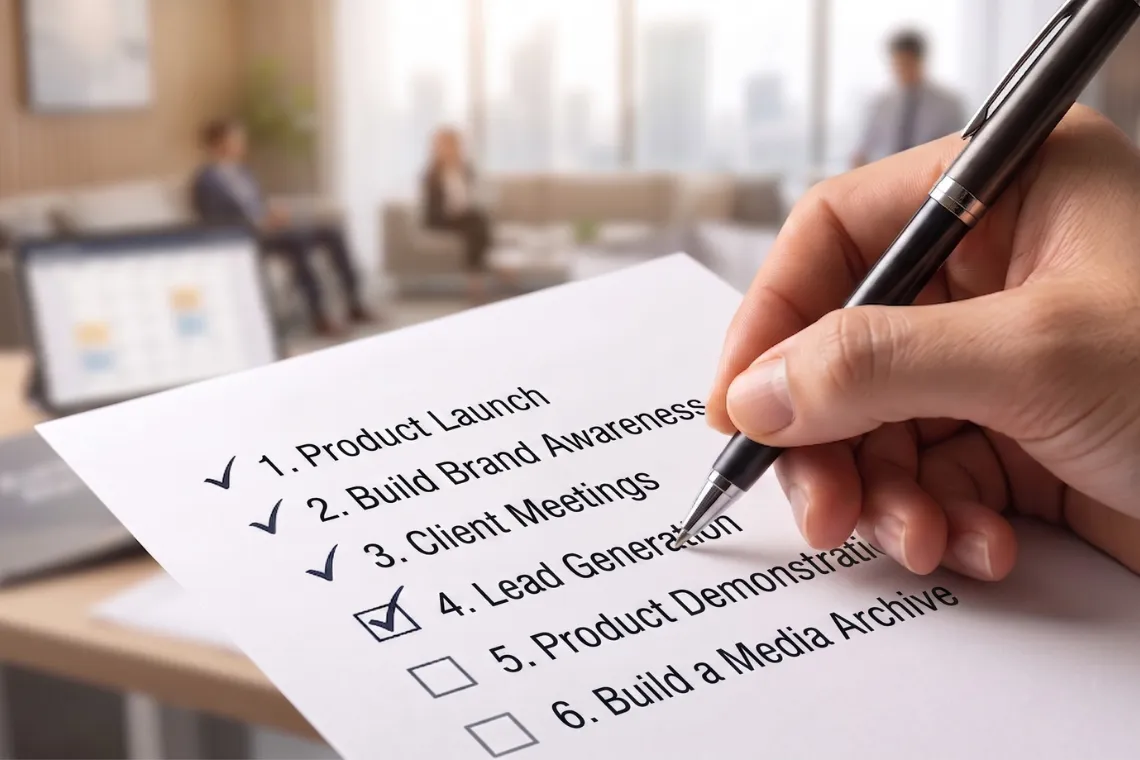
- Primary Goal: What is your main objective? Whether it is launching a new product, increasing brand awareness, hosting B2B meetings, capturing leads, running live demonstrations, or creating photo opportunities for media—your goal shapes the zoning and visitor journey.
- Products/Services on Display: What are you showcasing? Consider the quantity, dimensions, and weight of the items. Do you need custom shelving, hanging displays, product demonstration counters, AV screens, or a dedicated storage room?
- Booth Staffing: How many sales representatives or staff members will be stationed at the booth? This determines the space needed for service areas, reception counters, tables, chairs, and meeting zones.
- Visitor Engagement Flow: Do you prefer an open, approachable layout for casual browsing, or a structured setup with private discussion areas? Will there be a registration desk, giveaways, or live presentations?
3. Brand Identity & Visual Direction
This information helps the design team translate your brand's DNA into a physical, immersive spatial experience.
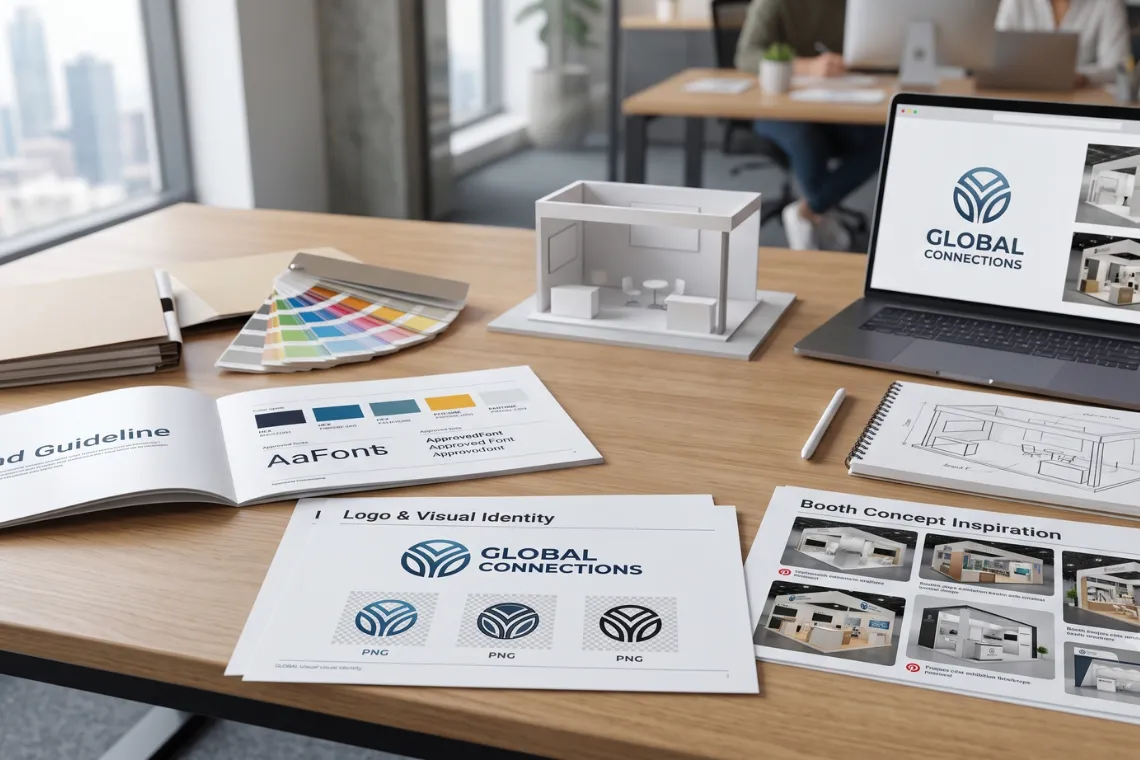
- Brand Guidelines: If you have a brand book, please share it. If not, simply specify your primary brand colors (HEX or Pantone) and preferred typography, along with the overall vibe you want to project (e.g., minimalist, bold & futuristic, premium, or warm & eco-friendly).
- Logos: Provide your official logos in high-resolution vector formats (AI, EPS, SVG) or high-res PNGs with transparent backgrounds.
- Design References: Share images of booths you like—whether from past events, Pinterest, or Google. You don't need to copy them, but they serve as an excellent visual shorthand to help the design team align with your aesthetic expectations instantly.
4. Budget Expectations
Don't worry about giving a "right" or "wrong" number. Sharing a budget range allows the design team to propose a buildable, realistic solution within your financial boundaries, rather than a magnificent design that can never be realized.
- Estimated Budget Range: A rough estimate is perfectly fine for initial assessments.
- Scope of the Budget: Clarify what this budget should cover. Does it only apply to fabrication and installation, or does it need to include graphics, AV equipment/screens, lighting, and furniture rentals? Clearly defining the scope makes it much easier to compare different proposals accurately.

5. Nice-to-Have (But Not Required Upfront)
If you don't have these ready when you first reach out, don't worry! We can easily start the initial consultation without them:
- Product photos or catalogs to help design the displays.
- Final artwork or Key Visuals (KV) for booth graphics.
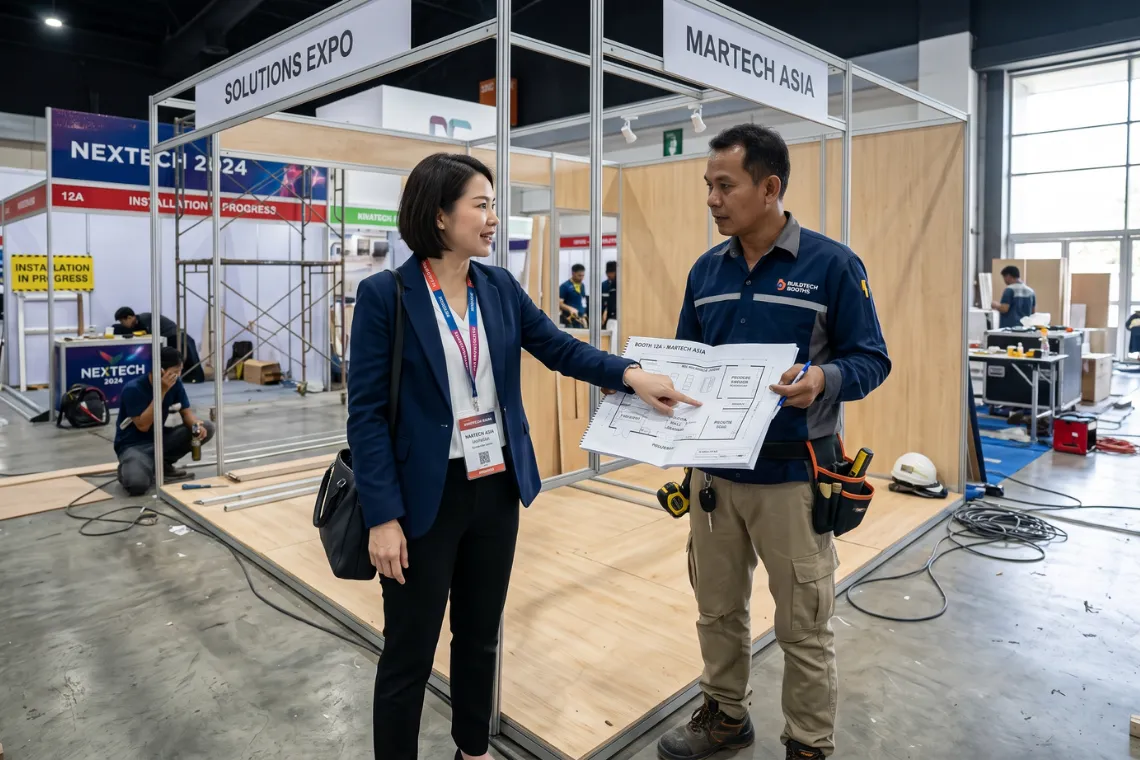
- The official floor plan layout assigned by the organizer.
- The Organizer's contact details or the Exhibitor Manual.
The Better the Brief, the More Accurate the Quote
Preparing your information beforehand doesn't mean you need to have every single detail figured out. It simply means coming to the table with your known parameters. This empowers the design team to pitch the right concept, estimate costs accurately, and get your project moving without unnecessary delays.
Not sure where to start? Just send us what you have. The Smile Exhibit team is ready to provide a free initial consultation to help you shape your brief.
Submit Your Brief & Request an Estimate Now → LINE OA
Or simply tell us your booth size and the event name—we can take it from there!